When to find amber
Amber doesn’t arrive evenly through the year — it reaches the shore in waves, after storms. Picking the right day matters more than luck. Here’s what makes a good one.
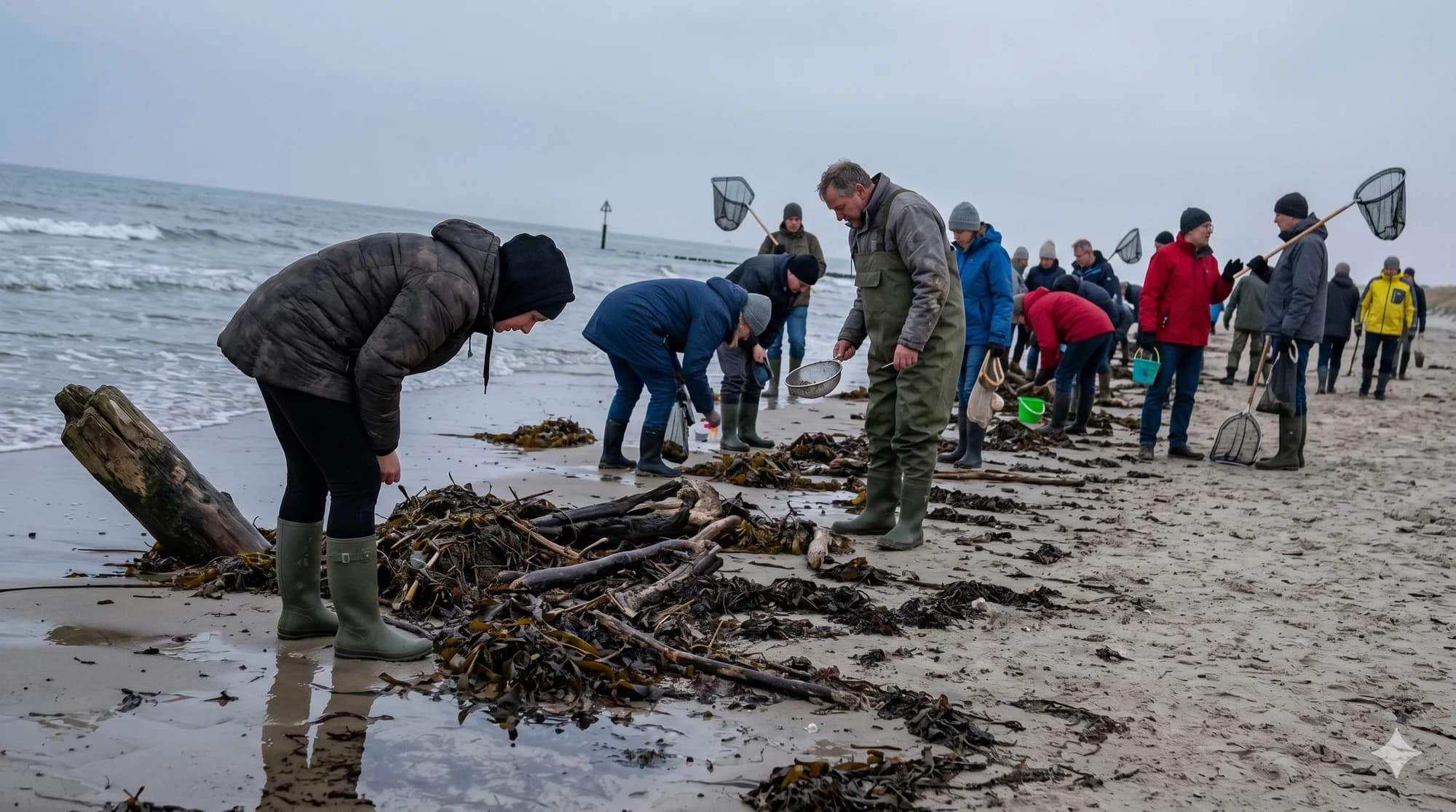
Most amber reaches Baltic beaches in the autumn and winter, when the sea sees the most storms.[1] A storm tears amber off the seabed and throws it ashore with the strandline — the band of seaweed, sticks and fine debris left at the tideline.
But the storm itself isn’t everything. How long ago it passed, what time of day you go, and which way the wind blew all matter too. Below we break those factors down.
How to pick a day for amber
Step by step — from the season down to a specific morning.
- 1
Hit the season
The best time is late autumn to early spring (roughly October–March), when storms are most frequent and the biggest waves occur.[1]
- 2
Wait for a storm with onshore wind
You need a strong, sustained storm with the wind blowing in off the sea, stirring the seabed. The best direction depends on how a particular beach faces — so it’s worth checking the forecast for your stretch of coast.
- 3
Go right after the storm
The best window is a few hours after the storm has passed, while the waves are still dropping but fresh strandline is lying on the beach.[2]
- 4
Choose early morning
Early in the day the beach hasn’t been combed by others yet — you’re more likely to reach fresh wash-ups first. After dark, a UV torch helps.[2]
- 5
Check the forecast
Rather than guessing, check the current chance of amber for your stretch of coast on the AmberMap map.
Season: autumn to early spring
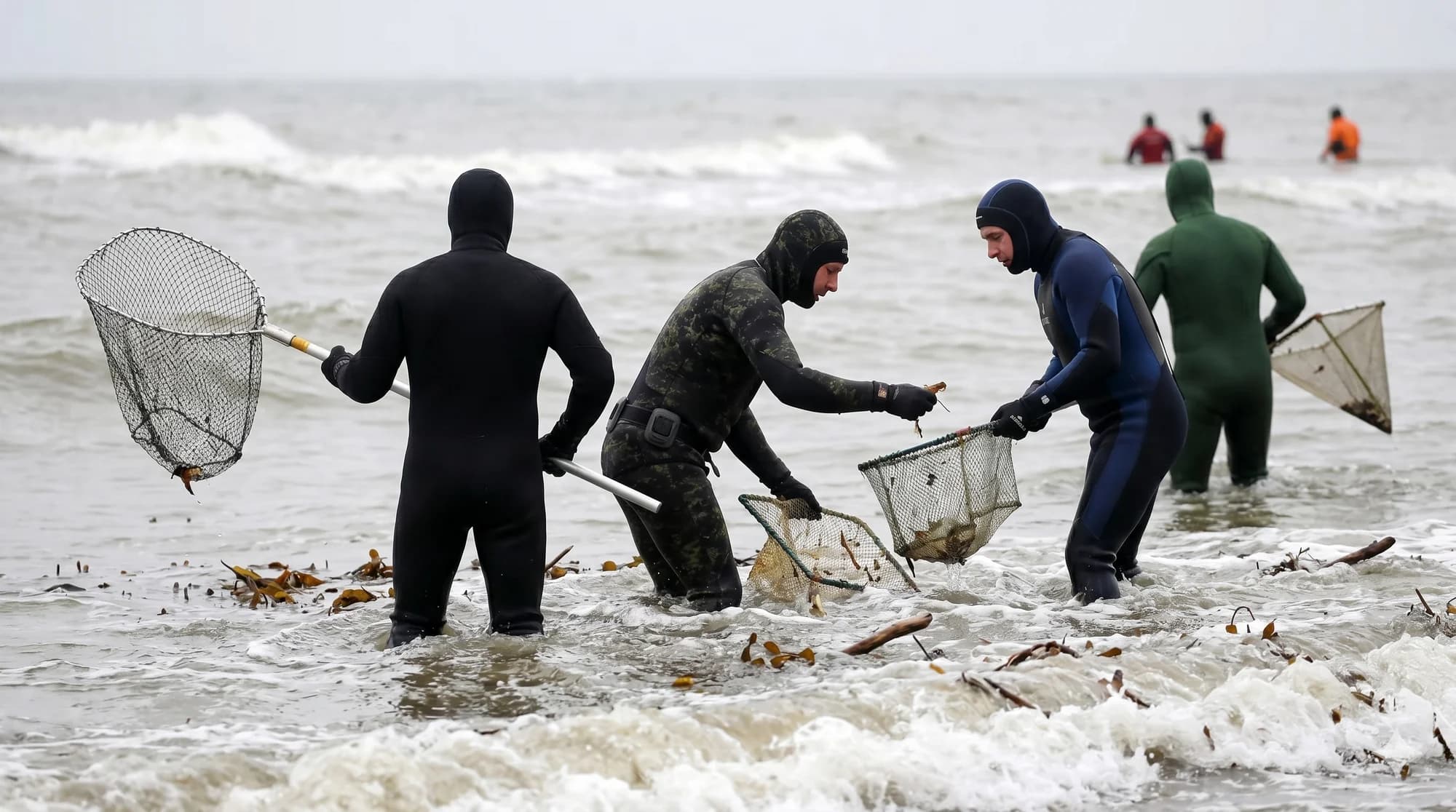
Storms on the Baltic are most frequent in autumn and winter — broadly October through March — and the highest waves occur in late autumn and early winter.[1][3] That’s why seasoned collectors spend the most time on the beach in winter, despite the cold: more frequent, stronger storms mean more chances for amber to work loose from the seabed and reach the shore.
In summer, storms are rarer, so there are fewer wash-ups — but it doesn’t mean there’s no amber at all. After any bigger, windy change in the weather it’s worth checking the beach, whatever the season.
After the storm, not during it
Going onto the beach at the height of a storm is dangerous — high waves can sweep you off your feet, and in winter the access paths and shore can be iced over. The best moment is a few hours after the storm, as the sea starts to settle and fresh material is already lying on the shore.[2]
The sooner you get there after the storm, the better — successive tides and other searchers gradually pick over the best bands of wash-up.
Wind and waves — what actually works
What matters is a strong, sustained wind blowing in off the sea, stirring the seabed and lifting amber from it. Because the Baltic coast faces different directions in different countries and regions, there’s no single magic wind direction — an onshore wind on one stretch comes from a completely different compass point than on another.
For that reason there’s no one universal rule for the whole coast. The AmberMap engine works out the chance separately for each region from the weather and marine conditions — the simplest thing is to check the ready-made result on the map rather than guess the wind direction yourself.
See also
Frequently asked questions
Is winter the best time?
How long should I wait after a storm?
Can you find amber in summer?
How do I know it’ll be a good day?
Sources
- Water (MDPI), peer-reviewed — “Changes in Sea Level, Storm and Wave Conditions… Over 70 Years of Observation in the Southern Baltic Sea” (storm/wave seasonality) (retrieved: 2026-06-23)
- Manufaktura Bursztynu / Amber Museum, Kołobrzeg — “When is the best time to go amber hunting?” (post-storm window, time of day) (retrieved: 2026-06-23)
- Finnish Environment Institute — “Climate in the Baltic Sea region” (autumn/winter storms, prevailing winds) (retrieved: 2026-06-23)
We’ll tell you when amber starts washing up
Leave your email and we’ll let you know when conditions on the Baltic coast point to a good day for amber. Now and then we’ll add some AmberMap news.
See when to go to the beach
The AmberMap map shows the current amber forecast for the Baltic coast.
Open the mapOr browse beaches with a dedicated forecast.