Amber after a storm
A storm has thrown amber ashore along with seaweed and fine debris. Now the key is knowing which wash-up band to search — and getting there before everyone else does.
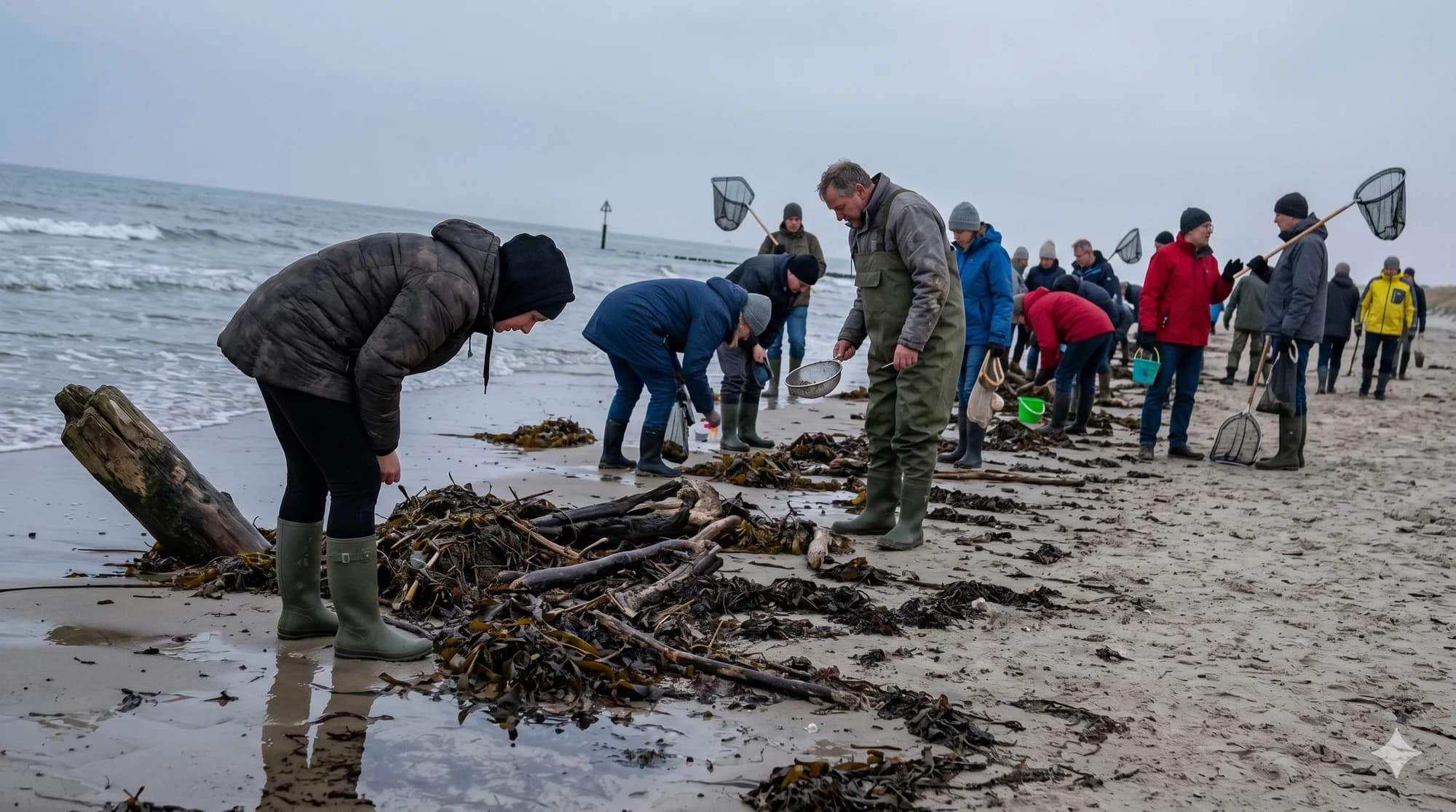
After a big storm the shore looks different from usual: bands of washed-up material appear, running parallel to the water’s edge. One is mostly gravel, another mostly shells, and another a mix of sticks, seaweed and dark lumps. It’s that last band — the strandline — that matters most to an amber hunter.[1]
Amber is light, so the waves carry it ashore with other «light» material: wood, peat and sea plants. The trick is to recognise the right band and patiently work through it.
How to search for amber after a storm
After a storm, speed and reading the shore are what count.
- 1
Find the strandline
Look for a band of wash-up running parallel to the water — the one with sticks, seaweed and fine organic matter, not just gravel or shells.[1]
- 2
Pick the right band
After a storm there are often several such lines. Focus on the ones collecting light material: wood, peat, plants — that’s what amber travels with.[1]
- 3
Search among the seaweed and sticks
Amber often clings to seaweed or is half-buried in sand. Sometimes brushing aside a few handfuls of weed reveals a pale-yellow piece inside.[1]
- 4
After dark, switch on a UV torch
In the dark, amber glows blue-green under UV. Run the beam low over the strandline and move it slowly.
- 5
Watch out for white phosphorus
Not every «amber» lump is safe. Before you pocket anything, read how to tell amber from dangerous white phosphorus — and never put finds in your pocket.[2][3]
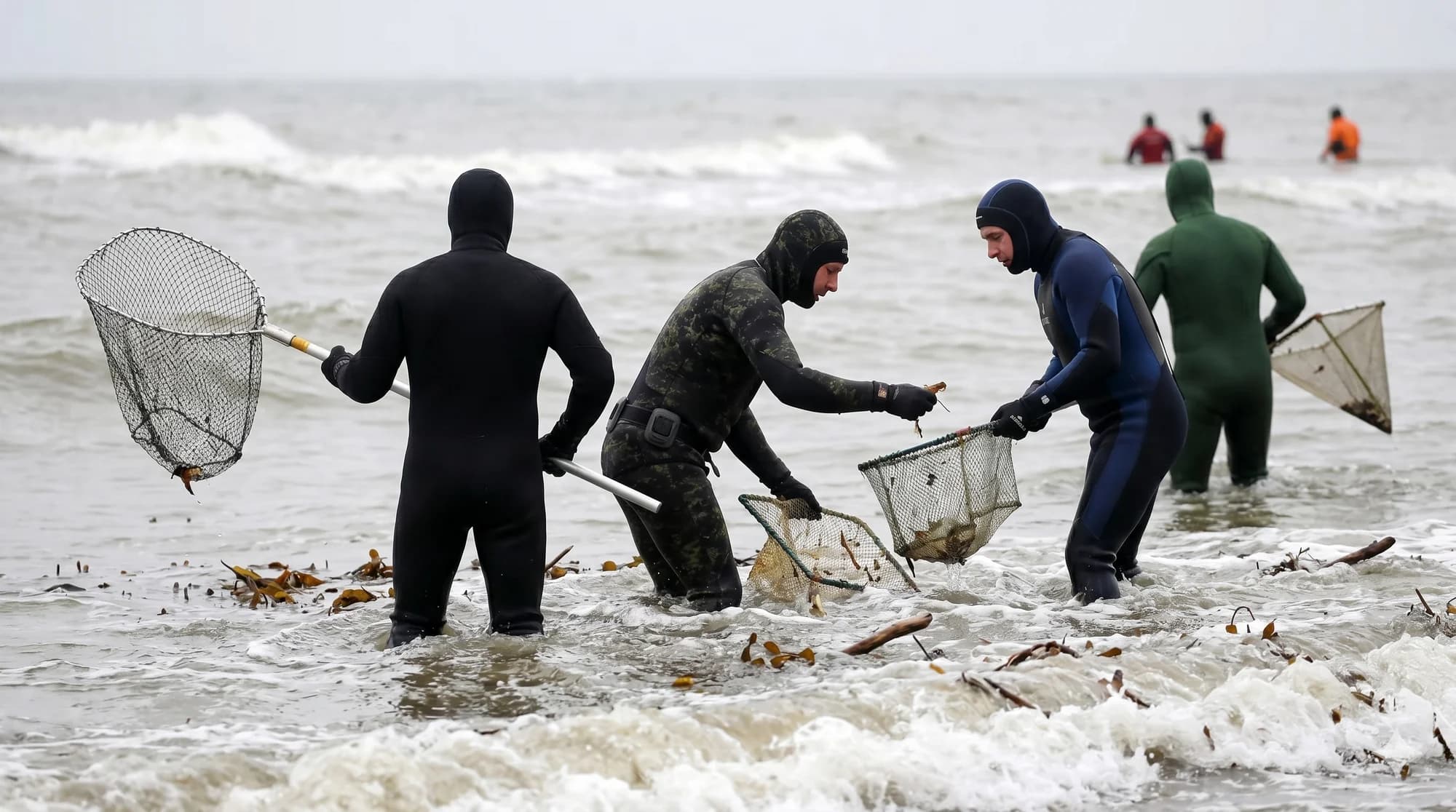
Read the wash-up bands (the strandline)
The first thing to do when you reach the beach is to look around and find the lines of washed-up material. The most valuable is the one with light organic material — sticks, peat, seaweed. Bands of pure gravel or shells usually don’t hide amber.[1]
After an especially strong storm the strandline can be thick and obvious; after a weaker one, barely marked. The fresher and less trampled it is, the better — which is why it’s worth being on the beach early in the morning.
Where amber actually hides
Amber rarely sits «in plain view» on clean sand. Most often it’s among the seaweed and sticks, stuck to them or partly buried. Scan and sift the light material by eye and hand, brush the weed aside, look under bits of wood.[1]
It helps to crouch and look at a low angle towards the sun, or to hold a torch low — small pieces are easy to miss from standing height.
Safety after a storm
Don’t go onto the beach during a storm or right at the edge of rough water — the waves can be treacherous, and in winter the access paths can be icy. Wait until the sea starts to settle.
The second, more important point: among the wash-up you can find white phosphorus — residue from Second World War munitions that looks just like wet amber and, once dry, can self-ignite and cause severe burns.[2][3] Never put finds in your pocket; we explain how to recognise the hazard in our guide on how to identify amber.
See also
Frequently asked questions
What does the strandline look like?
Should I go onto the beach during a storm?
What if the beach is already picked over?
I found something like amber — is it safe?
Sources
- Manufaktura Bursztynu / Amber Museum, Kołobrzeg — “How to find amber on the beach after a storm” (reading the strandline) (retrieved: 2026-06-23)
- Chemistry World (Royal Society of Chemistry) — “A dangerous guide to beachcombing” (white phosphorus mistaken for amber) (retrieved: 2026-06-23)
- The Local (Germany) — “‘Amber’ bomb bits set man’s pants on fire” (real white-phosphorus incident) (retrieved: 2026-06-23)
We’ll tell you when amber starts washing up
Leave your email and we’ll let you know when conditions on the Baltic coast point to a good day for amber. Now and then we’ll add some AmberMap news.
See when to go to the beach
The AmberMap map shows the current amber forecast for the Baltic coast.
Open the mapOr browse beaches with a dedicated forecast.