Amber on the Hel Peninsula
Hel sits at the very tip of the Hel Peninsula (Półwysep Helski) — surrounded by sea on two sides, with an open-Baltic beach on its northern shore where storms throw amber up onto the sand.[1] In winter the little town turns into a sleepy, deserted fishing neighbour of the Baltic — and that’s exactly when the beach is at its richest.
Current amber forecast for the Hel Peninsula
Sign in to see today and tomorrow’s forecast; the full 10 days are available with Premium.
Forecast calculated: Saturday, 19 September 2026. AmberMap forecasting engine. Updated every 3 hours.
When to hunt for amber at Hel
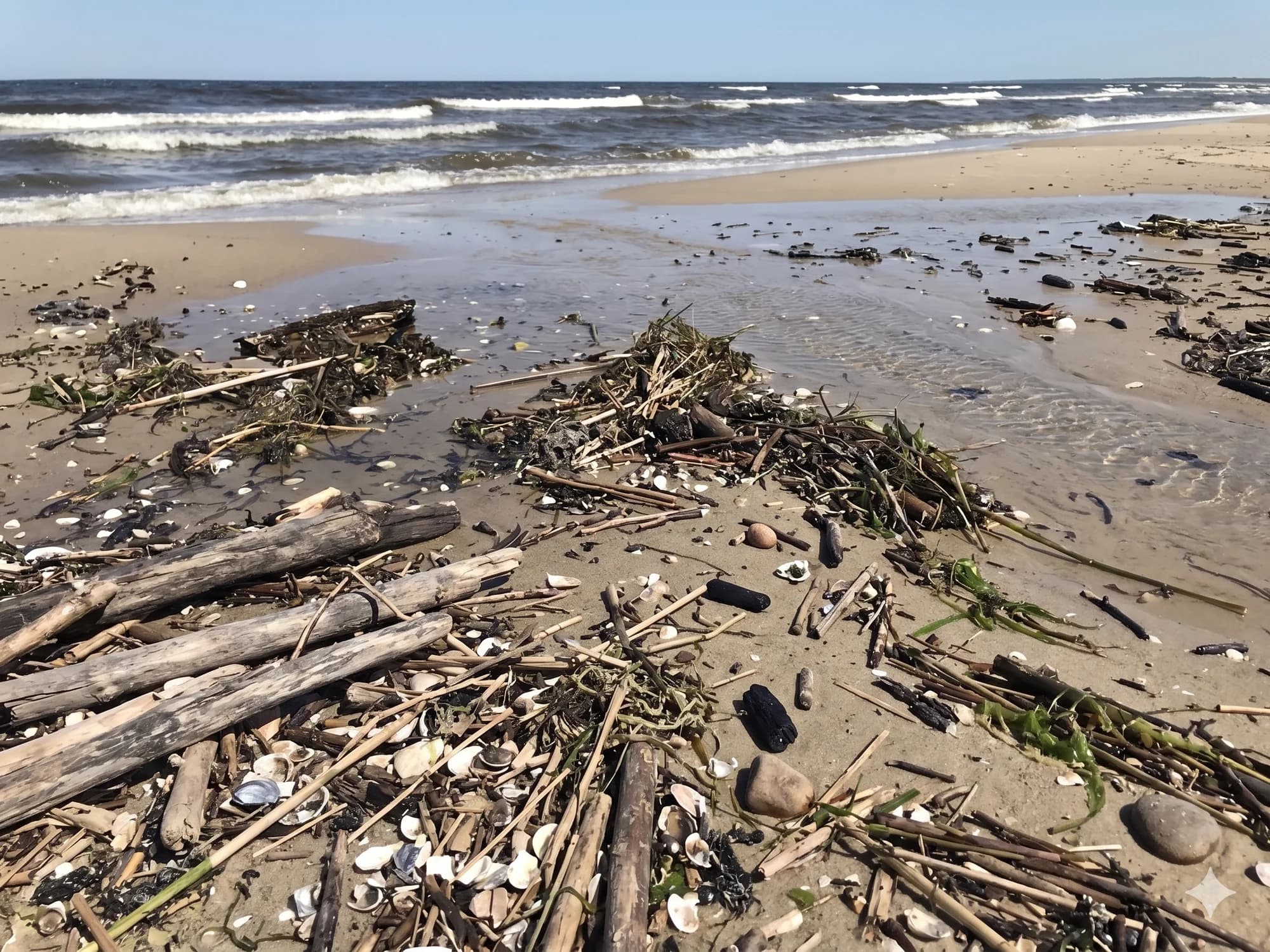
Amber season on the Baltic is late autumn and winter — that’s when the most storms pass through. IMGW (the Polish national weather service) records around 20–25 storm days per year on the Polish coast, peaking in November, January and March.[3] Each storm tears amber off the seabed and throws it onto the shoreline together with seagrass and seaweed.
For the open-sea side of the Hel Peninsula, the key winds come from the north-east (NE) — at this point the peninsula is oriented so that it is NE winds that push the waves straight onto the shore. The AmberMap engine (Jurata v6) treats this direction as the most favourable for the peninsula’s entire open-sea zone, from Władysławowo all the way to Hel. A southerly or westerly wind holds the waves on the other side of the peninsula and won’t help.
The best window is a few hours after a storm passes, when the waves are still dropping but fresh deposits are appearing on the shore. At Hel, winter has an extra advantage: there are few tourists, the beach stays practically uncombed for hours, and the conditions themselves — raw and atmospheric — suit the whole experience.[1]
Above this section you can see the current forecast for Hel (open sea). Keep in mind: the forecast is most reliable within a 1–2 day horizon and loses precision further out, because the weather data itself becomes less accurate — that’s a limitation of meteorological models, not of our forecasting engine.
How to read the amber forecast for the Hel Peninsula
The 0–100 score comes from the AmberMap forecasting engine and shows the chance of amber for a given hour. The colour scale is the same as on the map:
- 80–100 · Very good — Best moment — waves and wind are working in your favour.
- 60–79 · Good — A real chance of a successful search.
- 40–59 · Moderate — Decent conditions, but no guarantees.
- 20–39 · Low — Slim chances — more of a walk than a hunt.
- 0–19 · Unfavorable — No realistic chance under these conditions.
Estimated amber quantity
After signing in, each hour also shows an indicative amber-quantity range (in grams). The estimate depends on conditions and the beach's richness.
Safety warnings
- Ice danger — do not enter the water
- High waves — dangerous to wade in the water
- Inaccessible beach — beach flooded or inaccessible
Free — without logging in you see today’s forecast
Free registered account — today and tomorrow
How to get to Hel
Hel lies at the very tip of the Hel Peninsula, about 100 km from Gdańsk. The simplest route by car is national road DK 216, which runs along the whole peninsula from Władysławowo. In the summer season the route can be heavily congested — it’s worth setting off early in the morning.
By public transport: take a PKP train to Hel (the railway line runs the full length of the peninsula), or the SKM commuter rail to Gdynia and then a bus. In the summer season there is also a water tram from Gdynia and Sopot — an attraction in its own right.
Seasonal car parks are located in the town and by the beach access points. Prices and hours apply seasonally — check the signage on site.
The history of amber at Hel
The Hel Peninsula is a narrow strip of land over 30 km long stretching out into the Baltic — from Władysławowo to Hel at its tip. This shape means the open-sea beach takes waves and storms from three directions, which historically made it one of the better amber stretches on the Polish coast.[1]
In the town of Hel there is a Museum of Fishing, which displays the Amber Lighthouse — a replica of a lighthouse made from 50 kg of amber, standing 211 cm tall and listed in the Guinness Book of Records.[2] It is one of the best-known local amber attractions on the Polish coast.
All Baltic amber formed more than 40 million years ago from the resin of ancient coniferous forests. Poland’s largest collection can be seen at the Amber Museum in Gdańsk, housed in the Great Mill (Wielki Młyn) — a must-see stop after a trip to the peninsula.[4]
Nearby beaches
The Hel Peninsula and Puck Bay offer many stretches with different characters. The closest spots:
- Władysławowo — the start of the Hel Peninsula on the mainland side, easier to reach from the Tricity
- Sopot — the other side of the Bay of Gdańsk, an urban feel but the same amber trail
- Karwia / Dębki — west of Władysławowo, longer and less crowded beaches
Frequently asked questions
When is the best time to hunt for amber at Hel?
How does the open-sea side differ from the Puck Bay side?
What is the Amber Lighthouse at Hel?
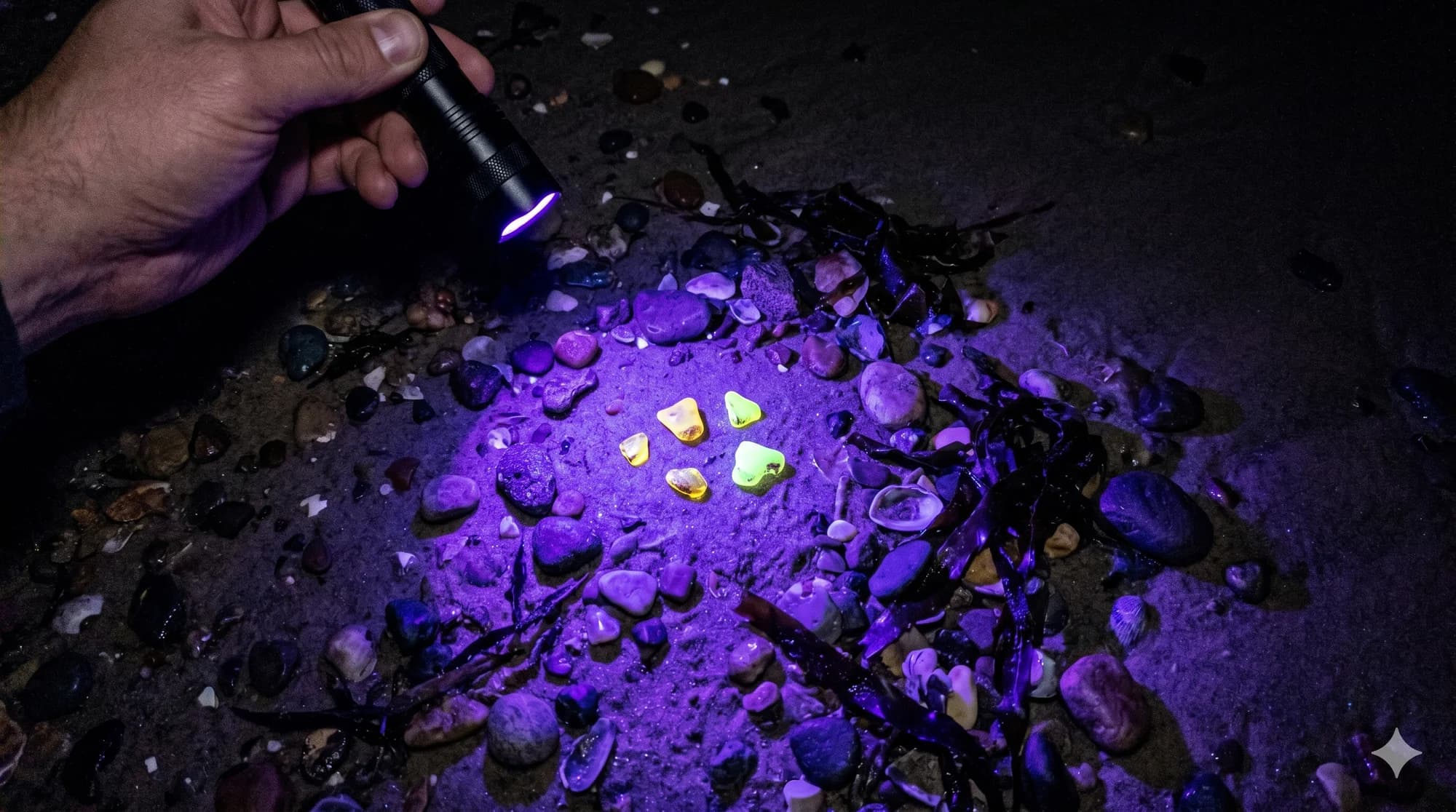
How do you recognise amber on the beach?
Can you keep amber found on the beach?
Is the AmberMap forecast for Hel free?
Sources
- Bartekwpodrozy.pl — “The Hel Peninsula: 14 attractions” (geography, amber beaches, seasonality) (Polish-language source) (retrieved: 2026-05-04)
- Szlakowe.pl — “Hel: the Museum of Fishing, the viewing tower and the Amber Lighthouse” (replica of 50 kg, 211 cm, Guinness Book of Records) (Polish-language source) (retrieved: 2026-05-04)
- IMGW-PIB — Baltic Service (storm statistics, hydrological warnings) (Polish-language source) (retrieved: 2026-05-04)
- Amber Museum — Museum of Gdańsk (the history of Baltic amber) (Polish-language source) (retrieved: 2026-05-04)
Check the forecast for your beach
See the map with the amber forecast for every region of the Polish Baltic coast.
Open the mapOr browse all beaches with a dedicated forecast.